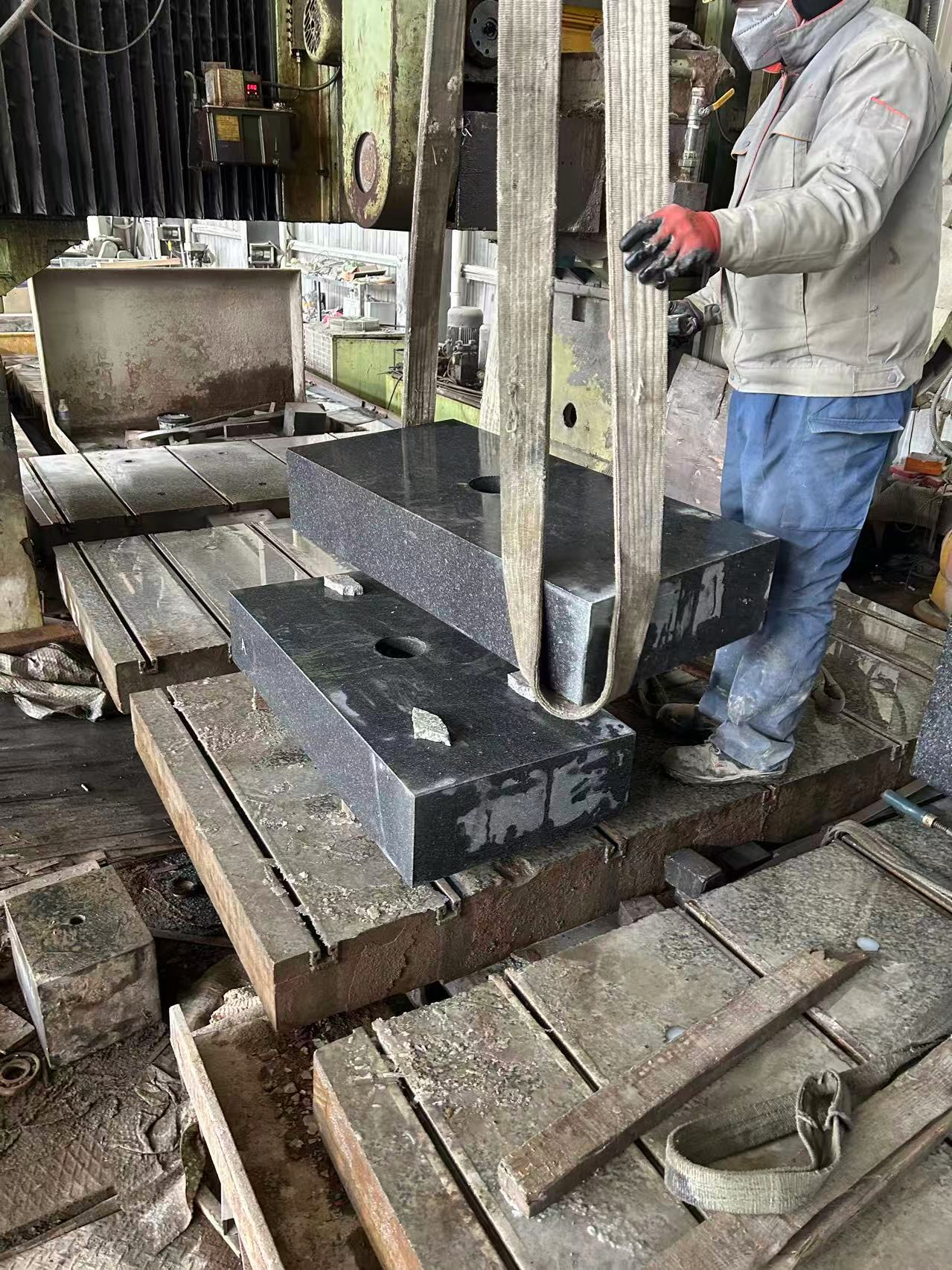
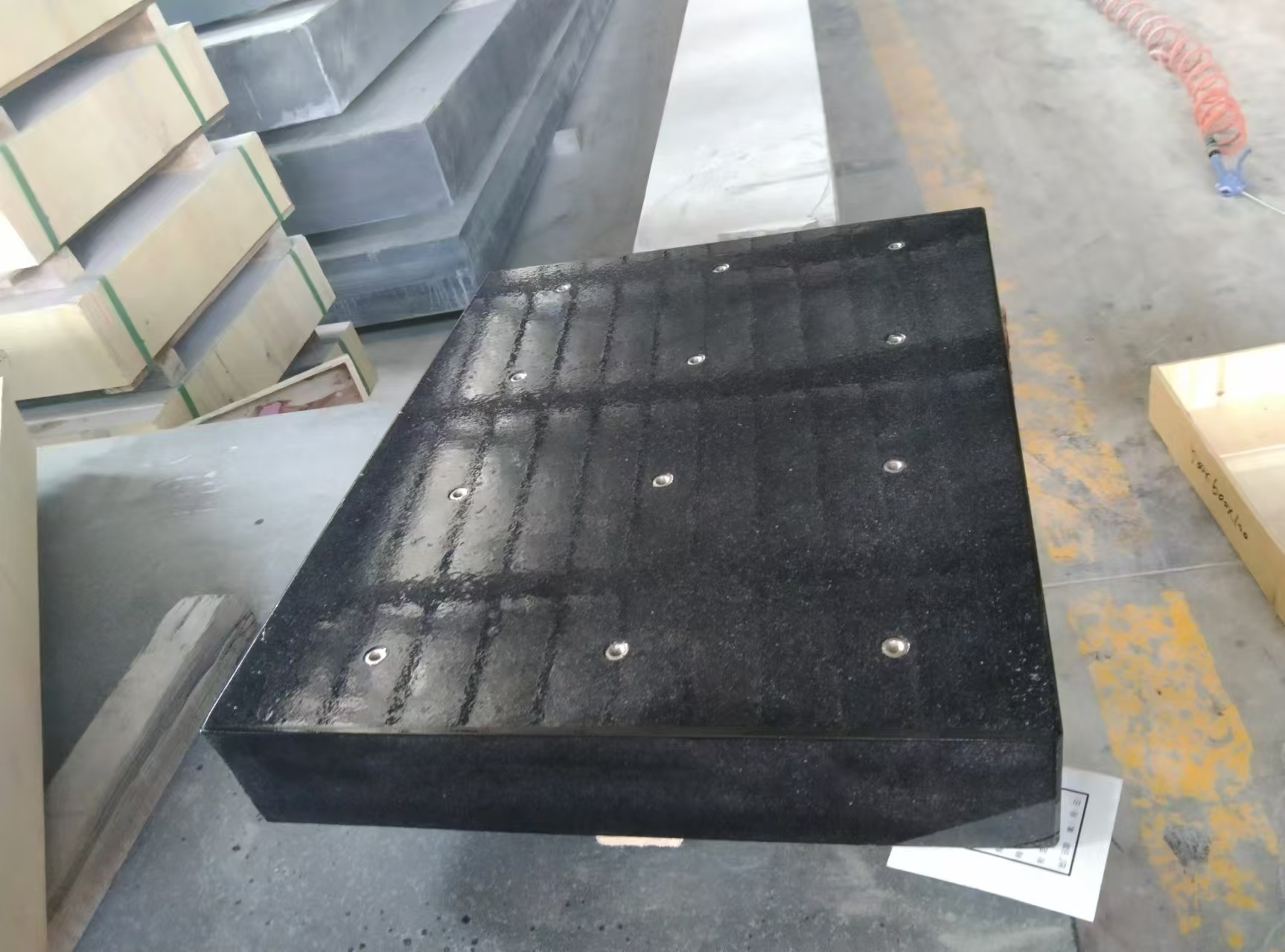
Solution Overview
Centered on “natural high-rigidity material + precision CNC machining”, these granite/marble mechanical components integrate three core advantages: structural load-bearing stability, micron-level machining precision, and full-environment adaptability. Specifically designed to address the pain points of traditional metal mechanical components—such as “significant thermal deformation, weak vibration attenuation, and long-term precision drift”—they serve as core structural parts (e.g., bases, guideways, beams, worktables) for precision equipment. Compatible with high-end equipment including precision machining tools, semiconductor devices, aerospace testing equipment, and optical inspection instruments, these components leverage the natural material’s ultra-low thermal expansion coefficient, excellent vibration resistance, and corrosion resistance. They enable equipment to “maintain stable long-term operation precision and extend structural lifespan by 50%”, helping high-end equipment break through bottlenecks in core structural stability.
Core Function System
1. High-Rigidity Structural Support and Precision Adaptation
- Super Strong Load-Bearing Rigidity: High-density natural granite (Jinan Green/Taishan Green, density ≥ 2.65g/cm³) or marble (density ≥ 2.7g/cm³) is adopted. The elastic modulus reaches 60-80GPa (for granite) and 50-70GPa (for marble), with a compressive strength of ≥ 180MPa. Under long-term load-bearing (e.g., 30-100 tons for machine tool bases), the deformation is ≤ 0.001mm/m, avoiding plastic deformation of metal components under long-term stress and ensuring stable structural precision of the equipment.
- Micron-Level Machining Precision: Through 5-axis CNC grinding and form grinding processes, the straightness of key surfaces (e.g., guideway surfaces, mounting datum surfaces) of the components is ≤ 0.002mm/1000mm, parallelism is ≤ 0.003mm/1000mm, and surface roughness is Ra ≤ 0.02μm. Complex structures (e.g., V-shaped guideway grooves, T-shaped mounting grooves, stepped table tops) can be machined, with groove width tolerance controlled within ±0.005mm, meeting the precise docking requirements of various parts of precision equipment.
- Uniform Stress Distribution: The internal structure of natural stone is uniform and free of impurities. After more than 24 months of natural aging treatment, over 99% of internal stress is eliminated, avoiding local stress concentration in metal components caused by welding and casting. No structural micro-deformation occurs during equipment operation (e.g., high-speed cutting, high-frequency vibration), ensuring transmission precision and motion stability.
2. Stable Operation with Anti-Interference in All Environments
- Ultra-Low Thermal Deformation: The thermal expansion coefficient of granite is only (5-8)×10⁻⁶/℃, and that of marble is (6-9)×10⁻⁶/℃—far lower than that of cast iron (11×10⁻⁶/℃) and steel (13×10⁻⁶/℃). Under equipment operating temperature fluctuations of -10℃~50℃, the structural dimension change is ≤ 0.0008mm/m, avoiding guideway gap changes and transmission deviations caused by temperature variations. This makes them particularly suitable for temperature-sensitive scenarios such as semiconductor devices and optical instruments.
- Efficient Vibration Attenuation: The internal damping coefficient of natural stone is 3-5 times that of cast iron, with a vibration attenuation rate of over 80% (only 30%-40% for metal components). It can absorb vibration energy generated during equipment operation (e.g., high-speed rotation of machine tool spindles, loading impact of testing equipment), reducing the interference of vibration on precision transmission and inspection data. For example, after a precision machining center adopts a granite base, the machined surface roughness Ra can be reduced from 1.6μm to 0.8μm.
- Corrosion Resistance and Wear Durability: The surface is dense and non-porous, capable of withstanding cutting fluids, lubricating oils, isopropyl alcohol, and other chemical reagents commonly used in the semiconductor industry, without the rust and oxidation issues of metal components. The surface hardness reaches HS70-80 (for granite) and HS55-65 (for marble), and the wear resistance is more than twice that of cast iron. After long-term friction (e.g., guideway sliding), the surface wear is ≤ 0.001mm per 100,000 cycles, extending the equipment maintenance cycle.
3. Multi-Scenario Mechanical Integration and Adaptation
- Compatibility with Multiple Component Types: Without changing the design scheme, they can be customized into different types of components such as precision machine tool bases, semiconductor lithography machine guideways, aero-engine test bench frames, and optical instrument worktables. They can stably adapt to small equipment parts like guideway sliders (size 50×50mm) and large equipment parts like integral bases (size 10000×3000mm).
- Convenient Mechanical Connection and Integration: According to equipment assembly requirements, precision threaded holes (precision M6-M20, hole position tolerance ±0.01mm), positioning pin holes (φ6-φ20, tolerance H7), and sealing grooves (width 5-20mm) can be machined on the component surface. This allows direct installation of motors, transmission mechanisms, sensors, and other parts, reducing precision loss caused by intermediate connectors.
- Auxiliary Function Collaboration: To meet equipment operation needs, dust-proof structures (e.g., guideway protective cover mounting grooves), heat dissipation channels (e.g., built-in heat dissipation holes), and shock absorption structures (e.g., elastic connection surfaces with metal brackets) can be integrated, improving the collaboration between components and the equipment system and reducing subsequent integration costs.
Core System Composition
| Component Category |
Core Parameters and Configuration |
| Granite Mechanical Components |
Material: Jinan Green/Taishan Green granite; Conventional Types: Bases (1000×500mm~10000×3000mm), Guideways (length 500mm~6000mm), Beams (800×200mm~5000×500mm), Worktables (300×300mm~4000×2000mm); Precision Grade: Straightness Grade 00 (≤0.002mm/m), Parallelism Grade 00; Load-Bearing Capacity: Bases ≤100 tons, Guideways ≤5 tons/m; Surface Treatment: Mirror polishing (Ra≤0.02μm), Scratch-resistant coating |
| Marble Mechanical Components |
Material: Black/beige marble; Conventional Types: Small worktables (300×300mm~1500×1000mm), Precision brackets (200×100mm~800×300mm); Precision Grade: Straightness Grade 0 (≤0.005mm/m), Parallelism Grade 0; Load-Bearing Capacity: ≤20 tons; Surface Treatment: Fine grinding (Ra≤0.05μm), Rust-proof treatment |
| Auxiliary Components |
High-precision connecting bolts (stainless steel, tolerance H6), Elastic adjustment gaskets (thickness 0.01-0.1mm), Guideway dust covers (bellows/telescopic type), Shock-absorbing pad irons (rubber-metal composite structure, shock absorption rate ≥60%) |
| Custom Accessories |
Built-in sensor mounting holes (φ3-φ10mm), Cooling water channels (aperture φ8-φ15mm), V-shaped guideway grooves (angle tolerance ±0.01°), Stepped positioning surfaces (step height tolerance ±0.003mm) |
Typical Industry Application Cases
- Precision Machining Center Base: A machine tool enterprise used it for a vertical machining center (X-axis stroke 3000mm) — a Jinan Green granite base (3500×1500×800mm) was adopted. When the spindle rotated at high speed (15000rpm), the vibration amplitude was reduced from 0.01mm to 0.002mm, the flatness error of machined parts was reduced from ±0.01mm to ±0.003mm, and the equipment precision retention period was extended from 1 year to 3 years.
- Semiconductor Lithography Machine Guideway: A semiconductor equipment enterprise used it for the guideway of a lithography machine’s workpiece stage — a custom Taishan Green granite guideway (length 2000mm, V-groove angle 90°±0.005°) was adopted. The thermal deformation was ≤0.0005mm/m, and with the precision drive system, the positioning accuracy of the workpiece stage reached ±0.0001mm, meeting the requirements of 7nm chip lithography.
- Aero-Engine Test Bench Frame: An aerospace enterprise used it for an engine performance test bench — a spliced granite frame (5000×2000×1200mm) was adopted, with a compressive strength of ≥200MPa. It withstood the 30-ton impact force during engine test runs for a long time, the frame deformation was ≤0.001mm, and the repeatability error of test data was reduced from ±0.5% to ±0.1%.
- Optical Inspection Instrument Worktable: An optical equipment enterprise used it for a laser interferometer worktable — a black marble worktable (800×600×200mm) was selected, with a surface roughness Ra≤0.01μm and no magnetic interference. The laser measurement accuracy was improved from ±0.001mm to ±0.0005mm, and the inspection efficiency was increased by 40%.
Core Competitive Advantages
- Precision Stability Far Exceeds That of Metal: The natural material avoids stress release and plastic deformation issues of metal components. The equipment’s operation precision retention period reaches 3-5 years (only 1-2 years for metal components), reducing the frequency of equipment calibration and maintenance and lowering operation and maintenance costs by more than 60%.
- Vibration Damping and Noise Reduction Improve Equipment Performance: The vibration attenuation rate is more than 50% higher than that of cast iron components, effectively absorbing high-frequency vibrations during equipment operation, and avoiding transmission errors and part machining defects caused by vibration. It is particularly suitable for high-speed, high-precision equipment scenarios.
- Environmental Adaptability Reduces Usage Restrictions: It can be used for a long time in humid environments (relative humidity ≤95%) and environments with chemical corrosion (e.g., cutting fluids, semiconductor reagents), without the risk of rust and corrosion of metal components, extending the equipment service life by more than 50%.
- Design Flexibility Meets Complex Needs: It supports 5-axis CNC machining of complex structures (e.g., special-shaped guideway grooves, multi-stepped table tops) with micron-level machining precision. Unlike metal components that rely on welding and splicing, it reduces precision loss caused by structural splicing and adapts to personalized equipment design needs.
Full-Dimensional Customization Services
- Structural Customization:
◦ Component Type Customization: Design bases, guideways, beams, worktables, and other component types according to equipment needs, supporting single-piece or spliced structures (maximum spliced size 15000×5000mm);
◦ Complex Shape Customization: Machining of special-shaped curved surfaces, multi-station stepped surfaces, dense mounting hole arrays, and other complex structures to meet the structural integration needs of special equipment.
◦ Basic Precision Customization: Provide precision grades of Grade 00 (straightness ≤0.002mm/m), Grade 0 (≤0.005mm/m), and Grade 1 (≤0.01mm/m) to adapt to the precision requirements of different equipment (e.g., Grade 00 for lithography machines, Grade 0 for conventional machine tools);
◦ Key Surface Precision Enhancement: For key parts such as guideway surfaces and mounting datum surfaces, custom ultra-precision machining (straightness ≤0.001mm/m, surface roughness Ra≤0.01μm) is available.
- Functional Customization:
◦ Surface Treatment Customization: Provide mirror polishing, scratch-resistant coating, anti-static treatment (surface resistance 10⁶-10⁹Ω), etc., to adapt to different usage environments;
◦ Integrated Functional Customization: Built-in cooling water channels, sensor mounting channels, shock absorption structures, etc., to improve the collaboration between components and the equipment system.
- Supporting Service Customization:
◦ Installation and Commissioning: Provide on-site splicing, horizontal calibration (precision ≤0.001mm/m), and collaborative commissioning services with other equipment parts;
◦ After-Sales Guarantee: Provide a 3-year free warranty, lifelong precision calibration and maintenance services, and customizable “regular inspection + rapid repair” guarantee plans;
◦ Technical Support: Provide component design drawing optimization and material selection suggestions to assist customers in completing the overall structural scheme design of the equipment.